During a discussion at the Murrumbateman Landcare meeting last week, a couple of people mentioned how large numbers of plants in their recent tubestock plantings had browned off – and possibly died – during the recent summer heatwaves. I also noticed the foliage of some native forest trees in our district turn brown during the same heatwave events.
It goes to show how unusual this summer’s heatwaves were, and how climate change is not just in the future; we are already experiencing hotter conditions. The trend is all in one direction: average minimum temperatures, average maximum temperatures, and the number of hot days (e.g., 35°C and above) are all increasing. You can explore the past data and local future projections at myclimateview.com.au.
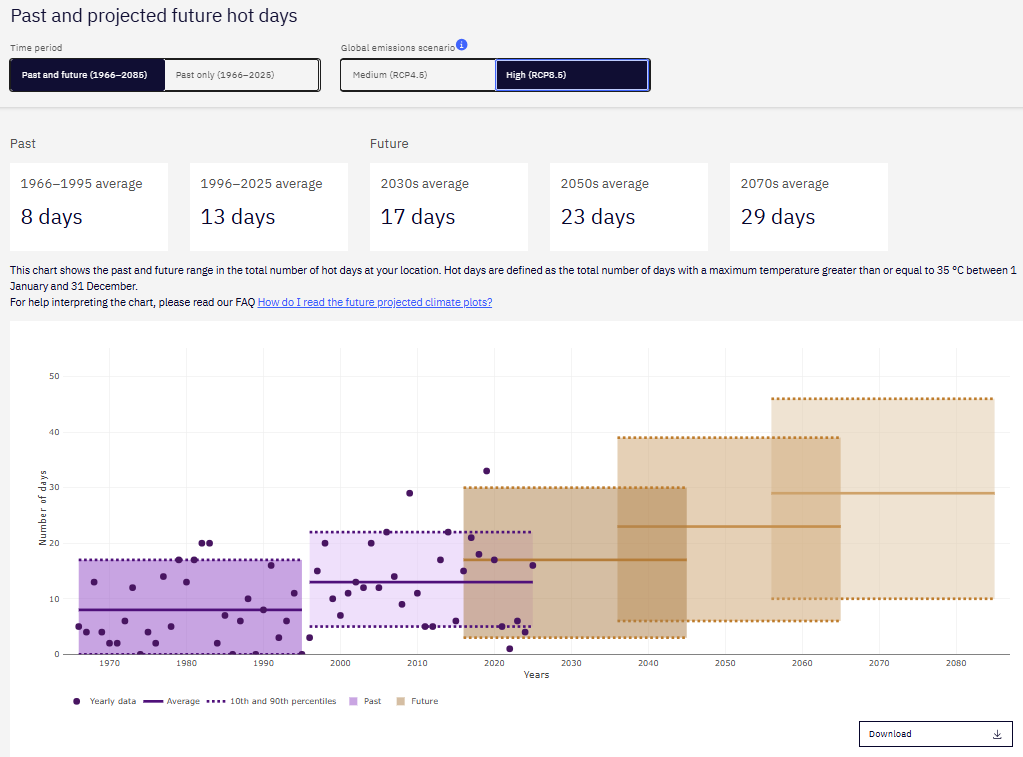
Image: This screenshot from My Climate View shows the increase in days 35°C and above for the Yass district, and how the trend is projected to continue into the future.
If you are looking at brown leaves, I’d urge you not to give up on your plants just yet. Many of our native species are tough and can often reshoot once the stress eases. It’s worth waiting at least several months (longer if you can!) to see if there are signs of life before deciding to remove a plant.
Our Climate Ready Revegetation program aims to improve the long-term survival of local revegetation by focusing on species that are likely to tolerate hotter conditions and maximising genetic diversity. As part of this work, it’s really important for us to hear your reports. By tracking what’s happening at your place, we can investigate if particular species, aspects, landscape positions, or management techniques fared better than others. These real-world "stress tests" help us refine our approach and ensure we are building a more resilient local environment.
So please get in touch with stories of your plants from this last summer and consider signing up to monitor your recent and upcoming plantings! It can help to ensure we are providing the right guidance on planting positions and techniques.
If you’d like to explore how our local climate experiences are connected to global trends, there are several recent resources I’d recommend:
The 2026 ANU Climate Update: Adaptation from soil to stars
The Biodiversity Council’s Webinar: Preparing for a more volatile future
The National Climate Risk Assessment
By Sonya Duus, Climate Ready Revegetation Project Officer
The Climate Ready Revegetation Project has been assisted by the NSW Government through its Environmental Trust. Landcare Australia Michael King grants enable us to purchase seed from diverse provenances.